

Industry Solutions
AI in Construction: How Artificial Intelligence Is Transforming the Building Industry
What Is AI's Role in the Construction Industry?
Artificial intelligence is reshaping the construction industry by improving safety monitoring, design accuracy, scheduling, and cost control across projects of every size. This shift is no longer experimental. Data analytics and generative AI now rank among the top transformative technologies in construction, according to global industry research.
AI in construction means machine learning, computer vision, and predictive analytics applied to the work of a project. That covers site safety, design, scheduling, and progress tracking. None of it replaces skilled labor. It helps teams catch problems early, cut waste, and decide while decisions are still cheap to change.
Why Construction Is a Strong Fit for AI
Construction projects generate enormous amounts of data through drawings, schedules, site photos, sensor feeds, and daily reports. Much of this data has historically gone unused because reviewing it manually is slow and inconsistent. AI changes that by processing this data continuously and flagging issues in near real time.
KPMG's Global Construction Survey ranks data analytics and generative AI in the sector's top ten transformative technologies. They sit alongside building information modeling and integrated project management. This reflects a broader industry shift from paper based and reactive processes toward data driven, predictive ones.
Why AI Adoption Is Accelerating Now
Industry research shows productivity gains are becoming measurable rather than theoretical. Analysis referencing McKinsey puts the prize at 14 to 15 percent industry-wide productivity from better use of project data. AI alone could lift productivity by up to 20 percent. It could also cut costs by up to 15 percent and improve delivery times by up to 30 percent. Separate analysis referencing Deloitte reports real projects landing 15 to 20 percent faster. Cost savings run 10 to 15 percent against traditional methods.
These figures matter because construction has historically lagged other industries in productivity growth. AI is one of the first technologies capable of closing that gap at scale.
AI Use Cases in Construction: A Deeper Look
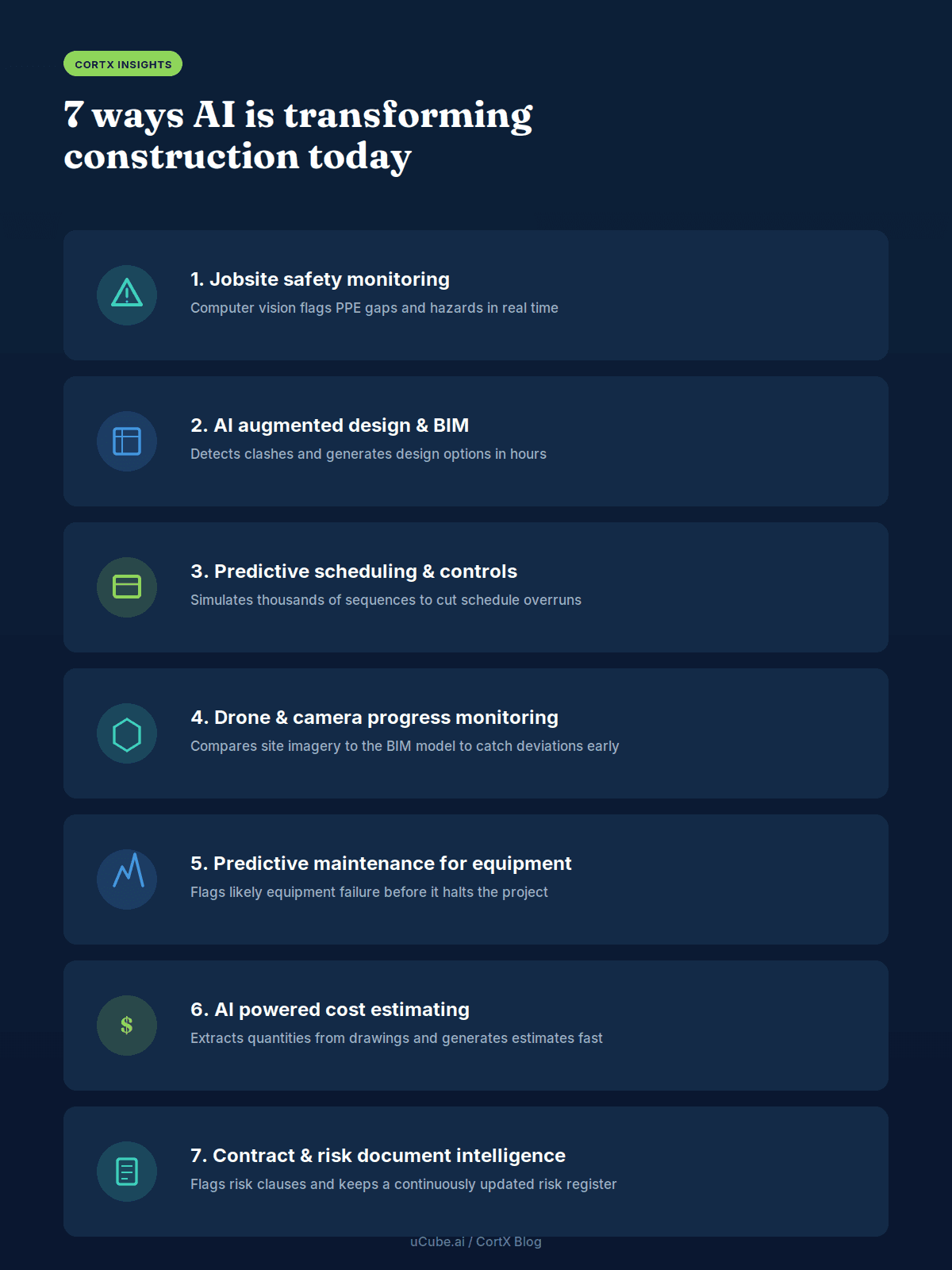
AI is already at work across the project lifecycle. Jobsite safety, design coordination, scheduling, cost estimating, and contract risk have all changed.
1. Jobsite Safety Monitoring
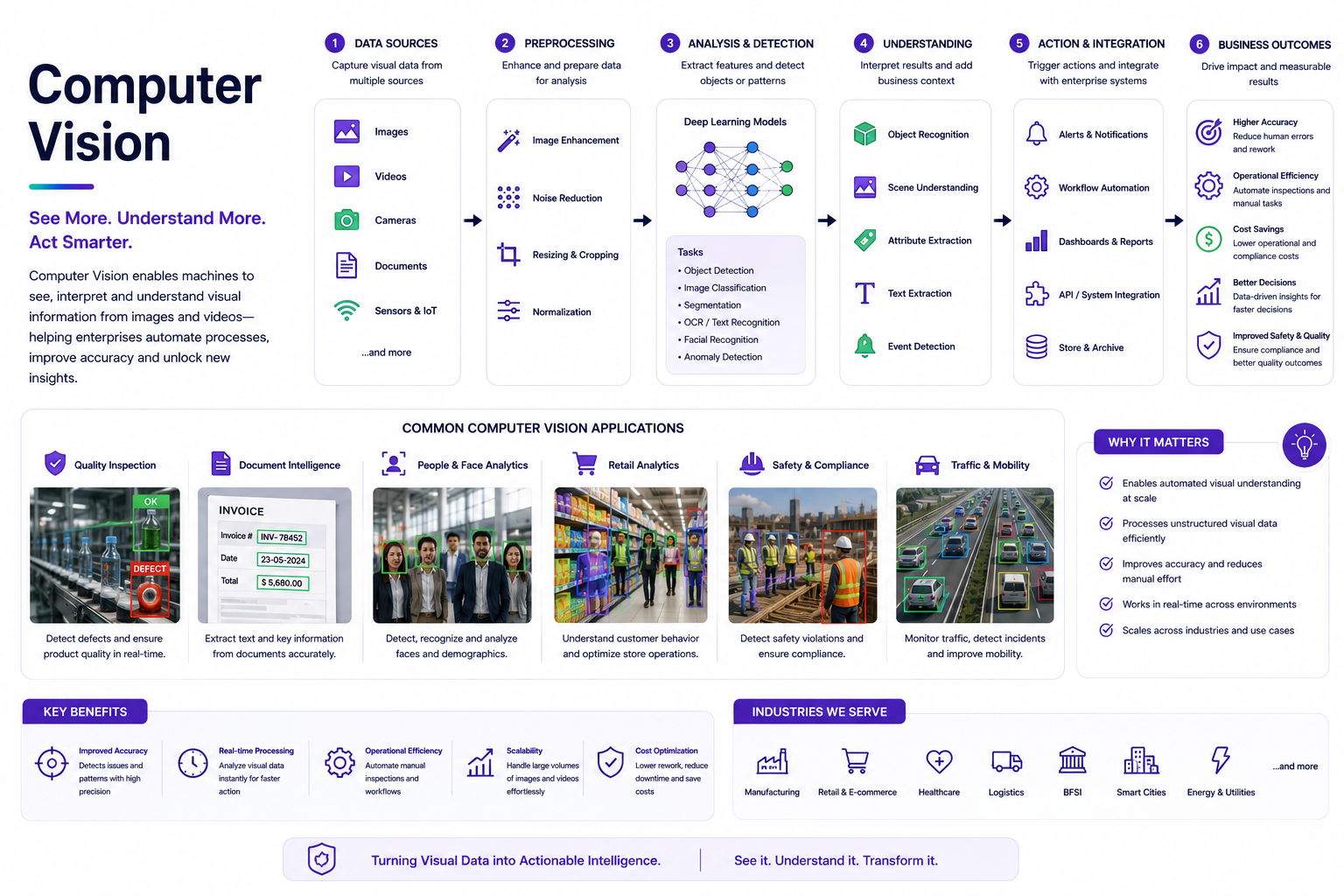
Computer vision reads live camera feeds and site footage. It spots missing protective equipment, workers standing too close to machinery, and hazards, before anyone gets hurt. Instead of relying solely on periodic safety walks, AI provides continuous monitoring across the entire site.
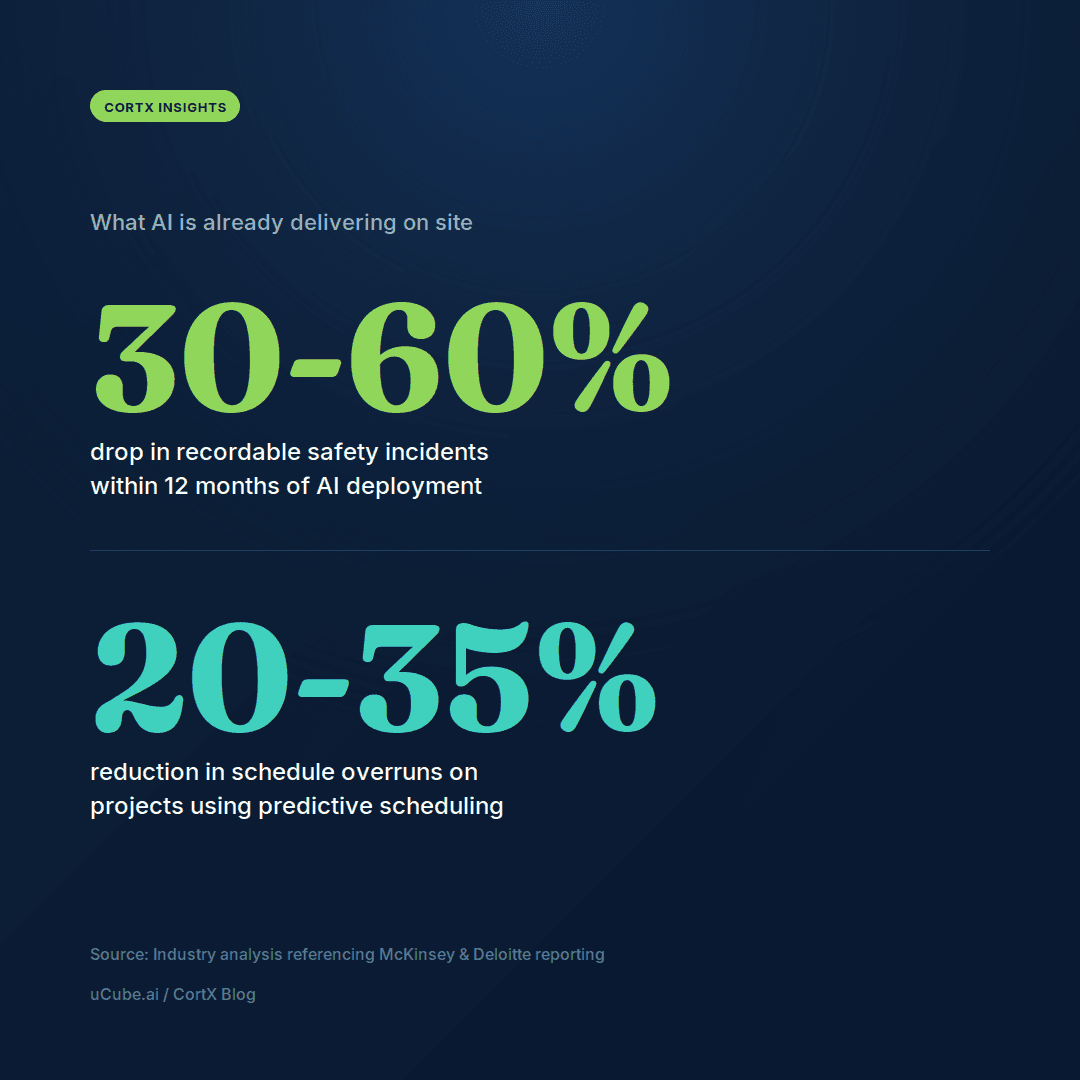
Documented results from AI safety platforms show recordable incident rates falling 30 to 60 percent within a year. Insurance premiums follow once a safety record exists. For a large project, this can mean the difference between a clean safety record and a costly, disruptive incident.
2. AI Augmented Design and BIM Optimization
Design errors cost the industry an estimated 5 to 9 percent of total project value. The reason is usually timing: clashes between trades surface only after building has started. AI-augmented BIM platforms catch those clashes on their own. They flag risk patterns from past projects and suggest designs that waste less material.
Generative design tools take this further, producing hundreds of design variations against multiple criteria in hours rather than weeks. A team that once weighed three design options can now weigh fifty in the same time. Better decisions arrive earlier, while they are still cheap to change.
3. Predictive Scheduling and Project Controls
Traditional scheduling relies on a single best guess based on planner experience. AI scheduling tools simulate thousands of sequences instead. They weigh labor, material delivery, and equipment limits, then recommend the sequence that balances cost, time, and risk best.
Teams can test a change before committing to it. Add a second crane, or authorize overtime, and see the effect on budget and timeline first. Reported results show schedule overruns down 20 to 35 percent on projects using these tools. Labor bottlenecks ease as well.
4. Drone and Camera Based Progress Monitoring
Manual site walks and subjective progress reports are no longer the only option. AI compares drone imagery or 360 degree footage straight against the model. Any gap between planned and actual progress shows up.
This cuts reporting time by 70 to 90 percent. It also catches deviations weeks before traditional reporting would surface them. For an executive running several sites, the feedback loop tightens. What happens in the field reaches leadership while it still matters.
5. Predictive Maintenance for Equipment
Heavy equipment failures can halt an entire project, cascading delays across dependent tasks. Models trained on equipment telematics and maintenance history predict when a machine will fail. Maintenance then gets scheduled before the breakdown, not after.
That removes unplanned downtime and emergency repair bills. Neither is easy to absorb on a tight schedule and a thin margin.
6. AI Powered Cost Estimating
Preparing accurate bids traditionally requires manually reviewing blueprints, specifications, and historical cost data, a process that can take days for complex projects. AI tools can now analyze drawings and specification documents automatically, extracting quantities and generating cost estimates in a fraction of the time.
Estimating teams can process more bids without adding headcount. It also removes the errors that come from rushed manual takeoffs under deadline.
7. Contract and Risk Document Intelligence
Contracts, requests for information, and compliance documents pile up fast. All of that text has to be tracked, or disputes and overruns follow. AI can read these documents, flag risk clauses, and maintain live risk registers that update continuously rather than being reviewed only periodically.
Risk management stops being a periodic review and becomes continuous. Teams can step in as problems appear rather than after.
Challenges and Risks of AI in Construction
Every credible discussion of construction AI needs to address its limitations. A few risks are worth planning for before adoption.
- Data quality. This is the main constraint. AI needs accurate, consistent site data, and sites tend to produce messy or incomplete records.
- Systems integration. This is hard too, especially with legacy project management or ERP software. Those systems were never designed to feed AI tools.
- Workforce readiness. This matters as much as the technology. Site teams and project managers need training to read AI output and trust it.
- Accountability. This stays with human project leaders. AI flags risk and waste, but safety, budget, and schedule calls still need professional judgment.
How Construction Firms Should Approach AI Adoption
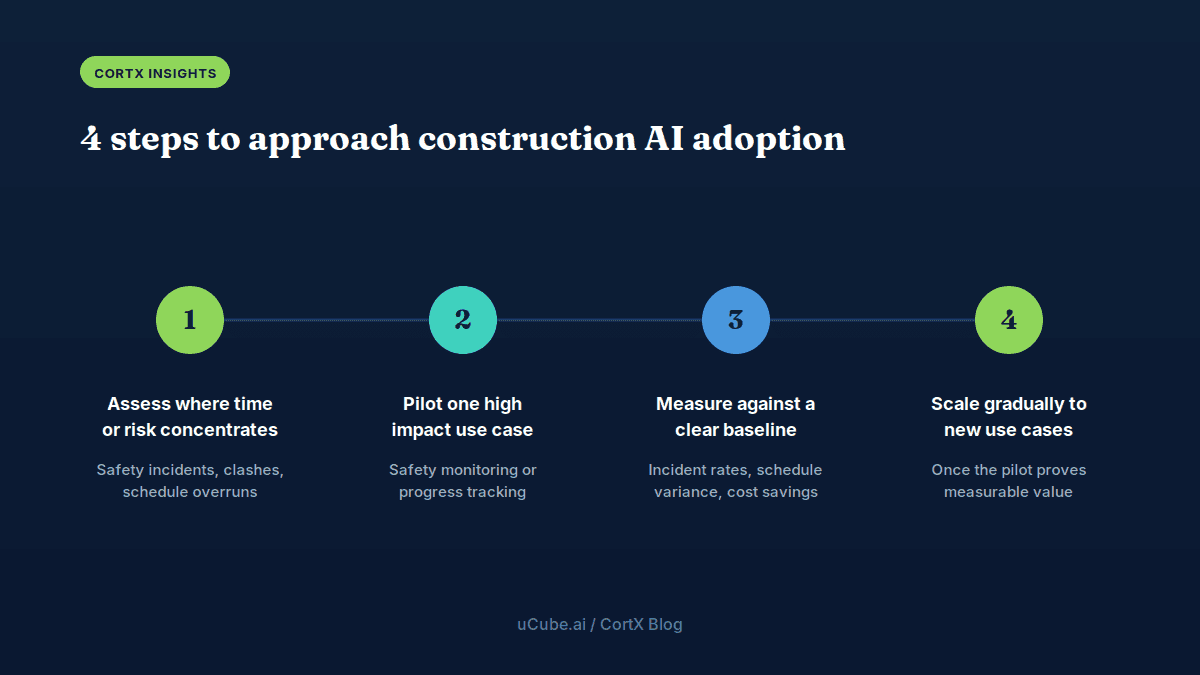
Firms do not need to adopt AI across every function at once. A more effective approach follows four steps.
- Assess current workflows. Identify where the most time or risk is concentrated, such as safety incidents, design clashes, or scheduling overruns.
- Pilot on one high impact use case. Try something like safety monitoring or progress tracking, rather than attempting a company wide rollout immediately.
- Measure results carefully. Track incident rates, schedule variance, or cost savings against a clear baseline.
- Scale gradually. Expand to additional use cases once the pilot shows measurable value and site teams are comfortable with the technology.
What Does the Future of AI in Construction Look Like?
Construction is moving toward continuous data monitoring. Decisions get faster and better informed at every stage of a project. Site safety, design coordination, scheduling, and cost control are all becoming proactive functions rather than reactive ones.
Firms that adopt AI carefully should see measurable gains in safety, cost control, and delivery speed. The reason is not that the technology is flashy. It closes the gap between what happens on site and what project leaders can see in time to act.
Key Takeaways
- AI is already active in safety monitoring, design optimization, scheduling, and progress tracking across the construction industry.
- KPMG research places data analytics and generative AI among the top transformative technologies in construction today.
- Reported productivity gains from AI adoption include faster project completion, reduced costs, and fewer safety incidents.
- AI complements rather than replaces the judgment of project managers, engineers, and site supervisors.
- Firms that pilot AI on a focused use case are better positioned to scale successfully.
Frequently Asked Questions
AI in construction is primarily used for jobsite safety monitoring, design clash detection, predictive scheduling, progress tracking, predictive maintenance, and cost estimating.
AI powered computer vision systems continuously analyze site footage to detect missing safety equipment, unsafe worker positioning, and hazardous conditions in real time, rather than relying only on periodic manual inspections.
Yes. Industry research shows data analytics and generative AI are now considered among the top ten transformative technologies for the construction sector.
No. AI can flag risks, inefficiencies, and design issues, but final decisions on safety, budget, and scheduling still require human judgment and professional accountability.
Data quality and integration with existing project management systems are the most common barriers, since AI tools depend on consistent, accurate site data to function effectively.
Reported payback periods vary by use case, but many safety monitoring and progress tracking tools show measurable returns within six to twelve months of deployment.
Turn this insight into your next move.
Tell us what you're building and we'll show you where uCube.ai actually fits — no generic demo, just a straight conversation about your data and your goals.